
20 Best Colleges for Sports Management 2026
The Waystone best colleges for sports management in 2026 are led by the University of Iowa and the University of Massachusetts Boston, ranked by debt payoff, ten-year return on investment, institutional strength and how concentrated each program is in the major. Past that top three, the full list runs 20 schools deep across 15 states.
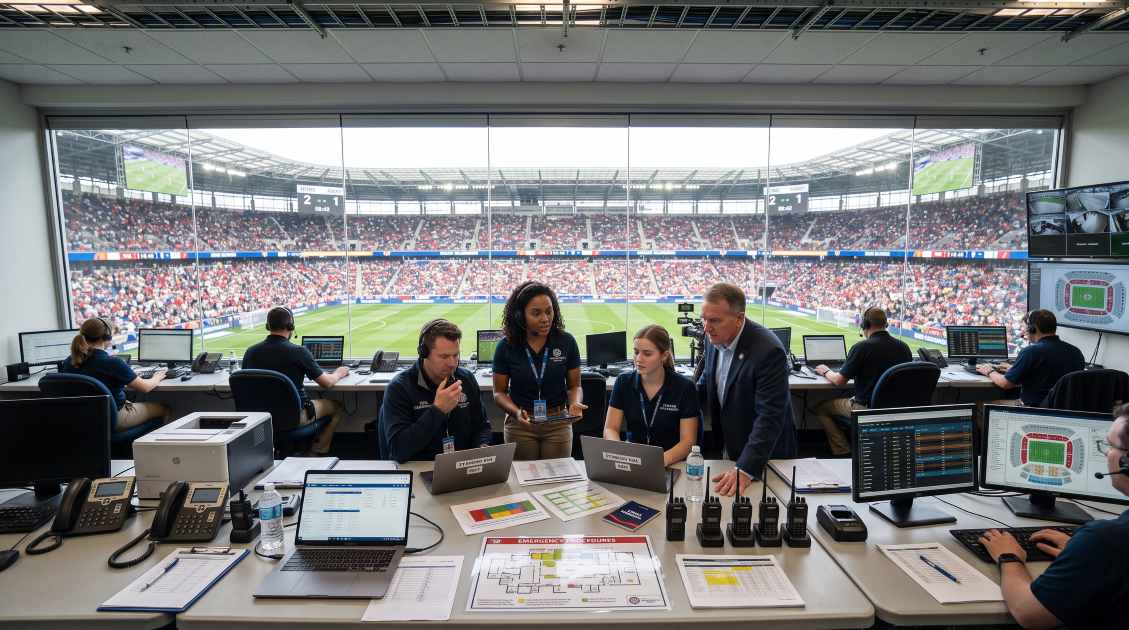
Two schools can carry the exact same major name and prepare you for two different careers. Most students search “best colleges for sports management” expecting one tidy ranking. What they find, once you look past the name on the diploma, is a business degree with a sports label at one school, a kinesiology degree with a business minor at another, and a handful of programs that split the difference.
So this list does two things at once. It ranks 20 programs on real financial and institutional data, and it shows you which kind of sports management degree each one is, so you can pick the one that matches where you’re headed, not just the title on the brochure.
If you want to see how a specific program stacks up against your own GPA, activities and academics before you commit to a list, see how Waystone's analysis works while you read through the rankings below.
Key Takeaways
- The University of Iowa’s B.S. in Sport and Recreation Management ranks #1 among the best undergraduate colleges for sports management, with a composite score of 72.5. Its program combines a 12-hour concentration with nine hours of required field experience, giving students a structured way to specialize in areas such as event management, entrepreneurship, coaching, or athletic administration.
- Four schools on this list, Arizona State, Shenandoah, John Carroll and Temple, run their sports management degree through an accredited business school instead of a kinesiology or exercise-science department.
- Sports management graduates compete for jobs the U. S. Bureau of Labor Statistics tracks under several separate titles. Agents and business managers of artists, performers and athletes earned a median wage of $82,890 in May 2025, with employment projected to grow 10 percent from 2025 to 2035.
How we ranked the best colleges for sports management
Waystone’s ranking uses publicly available data from the U.S. Department of Education’s College Scorecard and the National Center for Education Statistics’ IPEDS database—not name recognition. Waystone’s holistic methodology includes these four inputs that build each school’s composite score:
- Debt payoff score: what a graduate owes, measured against what they earn, benchmarked nationally against every other school offering a sports management degree.
- 10-year ROI percentile: return on investment over a decade, ranked the same way against national peers in the major.
- Institutional strength percentile: retention rate, student-faculty ratio, Pell-recipient completion equity and library investment per student, averaged from whichever of those four a school reports.
- Major concentration percentile: how a school’s share of sports management graduates compares to every other school offering the major nationally.
he score breakdown next to each rank lists the real share of that school’s graduates who completed a sports management degree, not the percentile version the formula above uses. Both numbers matter, but they answer different questions. One tells you how specialized the school is compared with every other sports management program nationally. The other tells you what fraction of that specific campus is studying it.
| Rank | School & program | What makes it distinctive | Score |
|---|---|---|---|
| 1 |
University of Iowa B. S. Sport and Recreation Management |
A 12-hour concentration plus nine hours of field experience, with tracks in event management, entrepreneurship and coaching. |
72.5
ⓘ
University of Iowa: score breakdown
|
| 2 |
University of Massachusetts Boston B. S. Sport Business |
A business-first sport degree with six sport-business courses and a capstone, alongside a separate leadership-focused B. A. track at the same school. |
71.0
ⓘ
UMass Boston: score breakdown
|
| 3 |
John Carroll University B. S.B. A. Sports Management |
Housed in the Boler College of Business, with separate Sports and Athletic Administration or Coaching and Personnel Development tracks. |
69.9
ⓘ
John Carroll University: score breakdown
|
| 4 |
Saint Ambrose University B. A. Sport and Recreation Management |
Requires two applied experiences (internship, practicum or independent study) plus a capstone, blending commercial sport with community recreation. |
69.7
ⓘ
Saint Ambrose University: score breakdown
|
| 5 |
University of Mary B. S. Sport & Leisure Management |
Housed in the Gary Tharaldson School of Business, requiring a 200-hour internship alongside marketing and facilities coursework. |
69.1
ⓘ
University of Mary: score breakdown
|
| 6 |
Temple University B. S. Sport and Entertainment Management |
Combines sport and entertainment management with concentrations in esports, events and promotion, plus two internships and 250 industry hours before senior year. |
65.8
ⓘ
Temple University: score breakdown
|
| 7 |
Manhattanville University B. A. Sport Studies |
An interdisciplinary sport studies degree with a 4+1 option that applies 12 graduate credits toward a Sport Business Management master’s. |
65.1
ⓘ
Manhattanville University: score breakdown
|
| 8 |
SUNY Cortland B. S. Sport Management |
The oldest undergraduate sport management major in the SUNY system, with more than 120 hours of field experience before a senior internship. |
63.2
ⓘ
SUNY Cortland: score breakdown
|
| 9 |
Shenandoah University B. B.A. with Sport Management Concentration |
An AACSB-accredited B. B.A. with a 24-credit sport management concentration and a business-focused internship sequence. |
61.9
ⓘ
Shenandoah University: score breakdown
|
| 10 |
Arizona State University–Campus Immersion B. A. Business, Sports Business Concentration |
A W. P. Carey School of Business degree with sports business as a concentration, plus an optional sports-business certificate. |
61.3
ⓘ
Arizona State University: score breakdown
|
| 11 |
University of Northern Colorado B. S. Sport Administration |
Embeds a required 21-credit business administration minor inside the 120-credit degree, spanning two colleges. |
58.2
ⓘ
University of Northern Colorado: score breakdown
|
| 12 |
Lubbock Christian University B. S. Sport Management |
Housed in Exercise and Sport Sciences rather than a business school, pairing sport-business coursework with legal and sociological study. |
57.6
ⓘ
Lubbock Christian University: score breakdown
|
| 13 |
Minnesota State University, Mankato B. S. Sport Management |
Requires students to apply to the major after 30 credits, with emphases in marketing, event management and facilities. |
55.3
ⓘ
Minnesota State Mankato: score breakdown
|
| 14 |
Springfield College B. S. Sport Management |
COSMA-accredited program reporting 90 percent of 2024-25 graduates employed or in graduate school, according to the college’s own outcomes data. |
53.4
ⓘ
Springfield College: score breakdown
|
| 15 |
Randolph College B. A. Sport and Exercise Studies |
A liberal-arts human-performance program with Coaching and Sport Performance or Health and Fitness pathways instead of a conventional business track. |
51.2
ⓘ
Randolph College: score breakdown
|
| 16 |
Ball State University B. A. or B. S. Sport Administration |
Offers both B. A. and B. S. routes, plus an accelerated pathway into a master’s-level sport administration program. |
49.9
ⓘ
Ball State University: score breakdown
|
| 17 |
Tiffin University B. B.A. Sports Management |
A B. B.A. covering club management, facilities and sports analytics, with Athletic Administration or Sports Marketing concentrations. |
49.3
ⓘ
Tiffin University: score breakdown
|
| 18 |
Western Kentucky University B. S. Sport Management |
A 63-hour major with a 12-credit internship requirement and electives in esports, sport analytics and intercollegiate administration. |
48.6
ⓘ
Western Kentucky University: score breakdown
|
| 19 |
Texas Southern University B. S. Sport Management, Business Non-Teaching Concentration |
A Business Non-Teaching concentration separating it from teacher-preparation routes, covering sport marketing, media relations and facility management. |
48.1
ⓘ
Texas Southern University: score breakdown
|
| 20 |
Immaculata University B.S. in Business and Sport Management |
A business-first B.S. with a three-year completion option and a 4+1 MBA pathway. Students build a full business foundation in accounting, finance, economics, human resources, marketing, operations, and entrepreneurship while applying it to sport administration, event logistics, facilities, sponsorships, and partnerships. |
46.7
ⓘ
Immaculata University: score breakdown
|
Choosing the right sports management pathway for your goals
The degree’s structure matters more than the major’s name. You will need to decide which of three pathways fits your goals: a business-first curriculum, an experience-heavy program built around internship hours, or a specialized track aimed at one specific career.
A business-first pathway if you want flexibility
There are four schools on this list run their sports management degree through an accredited business school instead of a kinesiology department. Arizona State’s B. A. in Business carries a Sports Business concentration through the W. P. Carey School of Business. Shenandoah’s B. B.A. adds a 24-credit sport management concentration on top of full AACSB accreditation. John Carroll’s B. S.B. A. sits inside the Boler College of Business, and Temple’s B. S. in Sport and Entertainment Management pairs sport-specific coursework with sales, analytics and economics. If you might pivot into general marketing, sales or management outside of sports later, a business-first degree gives you that insurance. A narrower sport-only major doesn’t.
An experience-heavy pathway if internships are the priority
Sports careers run on relationships, so documented field hours often outcompete coursework alone on a resume. SUNY Cortland requires more than 120 hours of field experience before a senior internship, plus a 40-hour event-management practicum inside its own athletics department. Temple requires two internships and 250 industry hours before senior year. The University of Iowa builds nine semester hours of field experience directly into its B. S., and Saint Ambrose requires two applied experiences through internship, practicum or independent study before graduation. Western Kentucky adds a 12-credit internship requirement on top of a 63-hour major.
A specialized pathway if you already know your target
Some programs are built around one career track instead of a general sports-business curriculum. The table below maps common goals to the programs on this list built specifically around them.
| Your goal | Programs to check first on this list |
|---|---|
| Athletic administration | John Carroll, University of Iowa, Western Kentucky, Texas Southern |
| Sports marketing and sponsorship | Temple, Shenandoah, Arizona State, UMass Boston |
| Sport analytics and data-informed business | Temple, Arizona State, Western Kentucky |
| Event and venue operations | Temple, University of Iowa, Shenandoah, Western Kentucky |
| Coaching, fitness and human performance | Randolph College, John Carroll, Lubbock Christian |
| Community recreation and youth sport | University of Iowa, Saint Ambrose, Minnesota State Mankato |
| Graduate acceleration into a master’s | Manhattanville, Ball State |
Best colleges for sports management by state
New York
Two New York schools make this top 20, and they sit at opposite ends of the pathway spectrum above. SUNY Cortland (#9) runs the oldest undergraduate sport management major in the SUNY system, built around more than 120 hours of field experience. Manhattanville University (#8) takes the specialized-track route instead, pairing an interdisciplinary B. A. in Sport Studies with a 4+1 option into a Sport Business Management master’s. If you’re set on staying in New York, search sport management on Waystone’s College Finder to see completion rates, earnings and debt payoff score for every New York program, not just the two that cracked this national top 20.
Ohio
Ohio’s two entries split along the business-first line drawn above. John Carroll University (#4) sits inside the Boler College of Business, with an 89.8 percent major concentration, the second-highest on this entire list. Tiffin University (#18) runs a similar B. B.A. structure but posts a lower institutional strength percentile (32.8) alongside its Athletic Administration and Sports Marketing concentrations.
Texas
Texas places two programs, and neither follows the business-school model above. Lubbock Christian University (#13) houses its B. S. inside Exercise and Sport Sciences, pairing sport-business coursework with legal and sociological study. Texas Southern University (#20) offers a Business Non-Teaching concentration inside its own education framework, worth reading closely if you assumed “sport management” always meant a business degree. Search the College Finder directly if you want every Texas option, not just the two that cleared this specific national cut.
What to look for in a sports management program
Look past the major’s title to the curriculum behind it. The strongest programs teach transferable business skills, accounting, marketing, management and data analysis, whether or not the degree carries a business-school label.
Required experience, not optional experience
Ask whether an internship is required for graduation, and how many hours it demands. SUNY Cortland’s 120-plus hours and Temple’s 250-hour requirement set a real floor for comparison. A program with no internship requirement at all is asking you to build that relationship-driven experience entirely on your own, on your own schedule.
Access to a real sports market
Location helps, but it isn’t enough by itself. A program should show a structured pathway into the local industry through faculty connections, athletics-department practicums and named employer partnerships, not just a city name on the brochure.
Career support and outcomes reporting
Check for sports-specific career fairs, alumni mentorship, an internship database and real outcome reporting. Springfield College reports that 90 percent of its 2024-25 graduates were employed or enrolled in graduate school, according to the college’s own outcomes data, a concrete number worth asking every program on this list to match.
The academic home behind the degree
A sports management program can live in a business school, a kinesiology department, a recreation and leisure studies department or an education school, and the academic home shapes the curriculum. A business-school version leans into finance, analytics and revenue. A kinesiology-based version, like Randolph College’s, adds exercise physiology, coaching and wellness alongside the business side.
Sport management vs. sport administration: does the title matter?
Usually, no. Sport management and sport administration are often different names for closely related degrees, and many colleges use the terms interchangeably. Both can prepare students for careers in marketing, sales, event operations, facilities, college athletics, recreation, sponsorships, finance, communications and leadership. The course list, academic home and required experience matter more than the words printed on the diploma.
For example, a program called Sport Administration may still include sport marketing, finance, facilities, event management, governance, ethics and internships. The University of Miami’s B.S.Ed. in Sport Administration, for instance, includes sport facilities and event management, sport marketing, sport-information management, finance and budgeting, plus a nine-credit internship.
| What to compare | Sport management programs often emphasize | Sport administration programs often emphasize |
|---|---|---|
| Typical framing | The business and commercial side of sport organizations | Leadership and oversight of sport organizations, teams, athletic departments or programs |
| Common coursework | Marketing, sponsorship, sales, finance, sport economics, consumer behavior, facilities, events and analytics | Governance, leadership, policy, ethics, finance and budgeting, compliance, facilities, events and organizational operations |
| Possible career directions | Ticket sales, partnerships, sponsorships, sport marketing, revenue generation, events, agencies and professional-team operations | Athletic administration, college athletics, interscholastic sports, recreation, facilities, events, program management and operations |
| What the title does not tell you | Whether the program is housed in a business school, requires an internship or teaches transferable business skills | Whether the program focuses on athlete development or is actually a broad sport-business degree under a different name |
How to choose between the two
Choose the program with the stronger curriculum for your target role—not the title that sounds more impressive. If you want sponsorships, ticket sales, brand partnerships, marketing or agency work, look for courses in sales, marketing, finance, consumer behavior and revenue generation. If you want to work in college athletics, high-school athletics, recreation, facilities or sport-program leadership, prioritize governance, budgeting, compliance, event operations, leadership and required field experience.
Most importantly, compare the internship requirement. A program that requires substantial hands-on work can be more valuable than one with the “right” name but no structured path to experience. On this list, SUNY Cortland requires more than 120 hours of field experience before its senior internship, Temple requires two internships plus 250 industry hours before senior year, and Western Kentucky requires a 12-credit internship. Those details tell you more about career preparation than whether the school calls the major sport management or sport administration.
What can you do with a sports management degree
A sports management degree leads toward a wide range of business-side sports careers, not just team front offices. The table below breaks down common paths and which programs on this list build toward each one.
| Career path | Typical work | Strong preparation on this list |
|---|---|---|
| Sports marketing | Campaigns, social content, fan engagement | Temple, Shenandoah, Arizona State |
| Ticket sales and partnerships | Sponsorships, premium sales, client relationships | Temple, Shenandoah |
| Team or league operations | Game-day logistics, administration | University of Iowa, SUNY Cortland |
| Athletic administration | College or high-school athletics oversight | John Carroll, Western Kentucky, Texas Southern |
| Event and venue management | Facilities, tournaments, scheduling | Temple, University of Iowa, Western Kentucky |
| Sport analytics | Data and business insights, ticketing analysis | Temple, Arizona State, Western Kentucky |
| Coaching and human performance | Coaching, wellness, athlete development | Randolph College, John Carroll |
Several of these paths fall under job titles the U. S. Bureau of Labor Statistics tracks directly. Agents and business managers of artists, performers and athletes earned a median wage of $82,890 in May 2025, and the agency projects 10 percent employment growth for the occupation from 2025 to 2035, well above the average for all jobs.
Matching this ranking to your own profile
This list ranks programs. It doesn’t rank your odds at any one of them. Two students with different GPAs, activity lists and state residency will see sharply different reach, good-fit and safety classifications, even at the exact same school on this table. The school’s own score never changes. Your odds there do.
It is also important to note that in-state tuition is worth weighing here too. Several of the strongest institutional strength and ROI numbers on this list, University of Mary’s perfect 100.0 ROI percentile for example may be impacted by in-state lower-tuition which affect the payoff math considerably.
Before you commit to a target list built purely from this national ranking, run your own GPA, activities, state residency and career target against these programs directly. That’s a different question than which school ranks highest nationally, and it connects to a broader point: the specific major usually matters more than the school’s overall prestige once you’re comparing programs at this level. Build your profile and get a personalized analysis that shows exactly where you stand against these 20 programs, not just where they stand against each other.
Frequently asked questions about the best colleges for sports management
What are the best colleges for sports management?
The Waystone best colleges for sports management, ranked by debt payoff, 10-year ROI, institutional strength and major concentration, are led by the University of Iowa and the University of Massachusetts Boston. The full ranked list of 20 programs above shows the same four inputs for every school, so you can compare well beyond just the top three.
Is sports management a good major?
Sports management can be a strong major for a student who wants a business or operations career inside the sports industry and who actively pursues internships, sales experience and networking. It’s a weaker choice for a student expecting the major alone to open doors without that outside effort, since the field runs on relationships and documented experience as much as coursework.
Do you need to play sports to major in sports management?
No. Sports management focuses on business, operations, marketing, law, finance, analytics, events, leadership and administration, not athletic participation. Every program on this list draws as many students from outside varsity athletics as from inside it.
What jobs can you get with a sports management degree?
A sports management degree leads toward sports marketing, ticket sales and partnerships, team and league operations, athletic administration, event and venue management, and sport analytics roles. The U. S. Bureau of Labor Statistics reports a median wage of $82,890 for agents and business managers of artists, performers and athletes, one of several job titles this degree feeds into, with 10 percent projected employment growth from 2025 to 2035.
What is the difference between sports management and sport administration?
The titles vary by college, and the curriculum matters more than the name on the diploma. Sport administration often leans toward organizational leadership and policy, while sport management tends to emphasize business operations, marketing, sales and events. Check the specific course list before assuming either title guarantees a certain focus.
Your next step
The best colleges for sports management aren’t the same for every applicant. Check whether a program sits in a business school, a kinesiology department or an education-school framework before you rank it against the others. Compare the internship-hour requirement as closely as you compare the composite score. Then weigh in-state tuition against out-of-state payoff numbers before you commit.
A full analysis costs as little as $35 a month. That's considerably less than a single hour with a private admissions counselor, and it's built entirely from your own GPA, activities, academics and career target, not a generic list.