
Best Colleges for Criminal Justice
Waystone has ranked the best colleges for criminal justice in 2026. The list is led by CUNY John Jay College of Criminal Justice, Calumet College of Saint Joseph and George Mason University. The ranking weighs debt payoff, ten-year return on investment, institutional strength and major concentration. Past that top three, the full list runs 24 schools deep across 16 states. It spans large public research universities and small, justice-focused colleges alike.
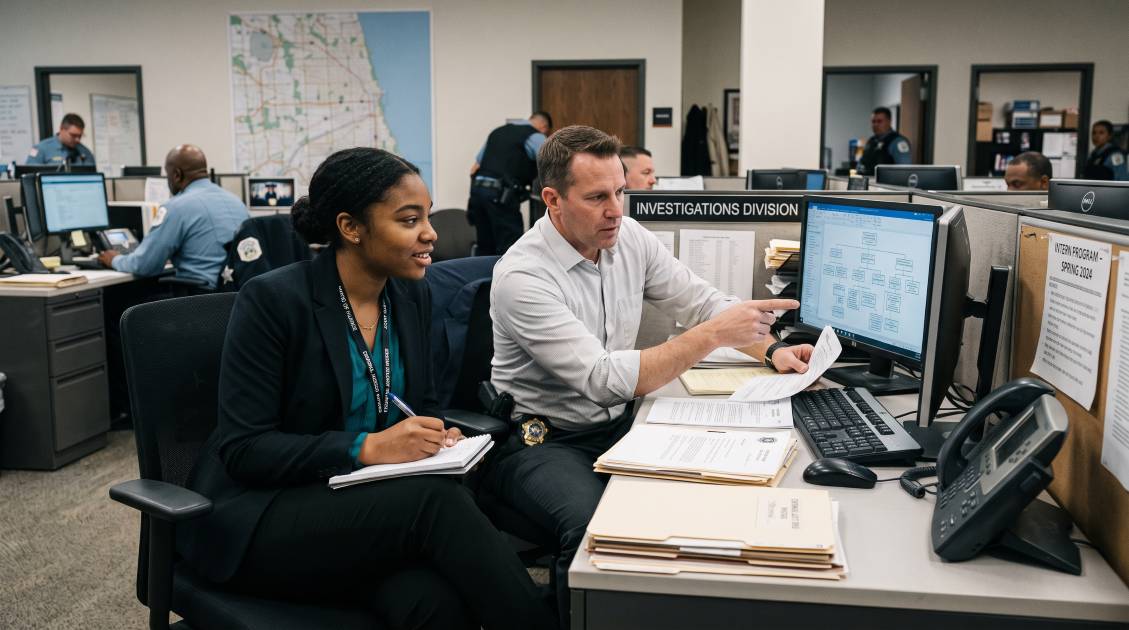
Ask five people what makes a criminal justice program “good” and you’ll get five different answers. Some point to prestige. While others point to internship access. And more just look at the price tag. But a bare list of school names doesn’t settle that argument on its own, and neither does a one-line description that could describe half the schools on the page. So this list shows the numbers behind each school’s rank.
It also covers what distinguishes each program: a research center, an agency partnership, an internship hour count, an accreditation most peer schools don’t hold. It also covers three states with their own rankings California, New York and Texas. And it explains how a criminal justice degree differs from a criminology or forensic science track.
Key Takeaways
- CUNY John Jay College of Criminal Justice ranks #1 among the best colleges for criminal justice. Its composite score of 87.3 comes from top-tier debt payoff, ROI and major concentration.
- Three California schools crack the top 24: Sacramento State (#12), Cal State East Bay (#17) and San Francisco State (#24). No Texas program lands in this particular national slice.
- The ranking blends four inputs, debt payoff, 10-year ROI, institutional strength and major concentration, not reputation or acceptance rate.
- The U.S. Bureau of Labor Statistics projects 3 percent growth for police and detective roles from 2025 to 2035, with about 60,100 openings a year on average. So program choice matters more for long-term positioning than for raw job availability.
How we ranked the best colleges for criminal justice
This ranking uses Waystone’s holistic methodology, not a single financial number and not a reputation survey. Four inputs build each school’s composite score:
- Debt payoff score: what a graduate owes, measured against what they earn, benchmarked nationally against every other school offering the same major.
- 10-year ROI percentile: return on investment over a decade, ranked the same way against national peers in the major.
- Institutional strength percentile: retention rate, student-faculty ratio, Pell-recipient completion equity and library investment per student, averaged from whichever of those four a school reports.
- Major concentration percentile: how large a share of the school’s graduates completed this specific major.
If you want to see how your own profile lines up against a specific school here, see how Waystone’s analysis works before you narrow your own list.
Waystone’s Best Colleges for Criminal Justice 2026
| Rank | School & program | State | What makes it distinctive | Score |
|---|---|---|---|---|
| 1 | CUNY John Jay College of Criminal Justice B.S. Criminal Justice and Police Studies | NY | Runs APPLE Corps, an NYPD- and NYC Council-funded pipeline program: participating freshmen receive up to $15,000 in stipends over four years, take cohorted policing coursework, and complete NYC-agency internships through a formal NYPD Cadets partnership. | 87.3 ⓘ CUNY John Jay College: score breakdown
|
| 2 | Calumet College of Saint Joseph B.A. Criminal Justice | IN | Splits into two named bachelor’s tracks, B.S. Probation, Parole and Courts and B.S. Forensic Criminology, with electives like Criminal Profiling and Psychology of Stalking not found at most CJ programs. | 81.0 ⓘ Calumet College: score breakdown
|
| 3 | George Mason University B.A. Criminology, Law and Society | VA | The internship option can be fulfilled through Mason’s own sworn police department’s Police Cadet Program or Fairfax County’s Police Leaders of Tomorrow summer program, both named, structured law-enforcement placements built into the degree. | 81.0 ⓘ George Mason University: score breakdown
|
| 4 | Rutgers University–Newark B.A. Justice Studies | NJ | Granted through the Rutgers School of Criminal Justice, with a formal 3+3 option and an Accelerated Master’s track that earns a BA plus an MA in Criminal Justice on a compressed timeline. | 80.7 ⓘ Rutgers–Newark: score breakdown
|
| 5 | George Washington University B.A. Criminal Justice | DC | The applied-experience capstone explicitly bars law-firm placements as too clerical, and instead requires at least 8 hours a week at an outside agency working directly with offenders, victims or the justice system. | 80.3 ⓘ George Washington University: score breakdown
|
| 6 | University of Washington Tacoma B.A. Criminal Justice | WA | Houses the Violence Prevention and Transformation Research Collaborative, a funded research initiative on school violence and threat assessment; the required internship course caps at 20 students and runs 100 hours over 10 weeks. | 80.0 ⓘ UW Tacoma: score breakdown
|
| 7 | Roger Williams University B.S. Criminal Justice | RI | Home to the Justice System Training and Research Institute, holds the ACJS Academic Review Committee endorsement for program quality, and offers both a 4+1 (BA plus MS in one added year) and a 3+3 BA/JD law pathway. | 78.8 ⓘ Roger Williams: score breakdown
|
| 8 | The Citadel, The Military College of South Carolina B.A. Criminal Justice | SC | The required internship mandates at least 80 hours over 8 weeks with a criminal-justice agency, and can be repeated for up to 6 total credits across two separate semesters. | 78.6 ⓘ The Citadel: score breakdown
|
| 9 | Seattle University B.A. Criminal Justice and Criminology | WA | Houses the Crime and Justice Research Center, where undergrads work directly with faculty on research, and offers both a six-year combined Bachelor’s/JD and a five-year BA plus MA in Criminal Justice and Criminology. | 78.2 ⓘ Seattle University: score breakdown
|
| 10 | American University B.A. Justice, Law and Criminology | DC | Houses the Justice Programs Office, which runs the National Drug Court Resource Center; past student internship placements include the National Institute of Justice, the FBI, the U.S. Secret Service and DHS. | 77.6 ⓘ American University: score breakdown
|
| 11 | Rutgers University–Camden B.A. Criminal Justice | NJ | Offers an accelerated BA/MA pathway that earns a Master of Arts in Criminal Justice in less time than completing the two degrees separately. | 77.4 ⓘ Rutgers–Camden: score breakdown
|
| 12 | California State University, Sacramento B.S. Criminal Justice | CA | Operates a dedicated Crime Scene Teaching Laboratory and offers a Crime and Intelligence Analysis Certificate alongside a separate Forensic Investigations minor. | 77.3 ⓘ Sacramento State: score breakdown
|
| 13 | University of Baltimore B.S. Criminal Justice | MD | One of the first two U.S. institutions to have both its undergraduate and graduate criminal justice programs ACJS-certified, with an accelerated bachelor’s-to-master’s pathway and a presumptive-admit pathway into UB’s own law school. | 77.0 ⓘ University of Baltimore: score breakdown
|
| 14 | Western Connecticut State University B.A. Justice and Law Administration | CT | Built around a shared 39-credit core plus five named options, Law Enforcement; Corrections, Probation, Parole and Offender Rehabilitation; Criminology; Legal Studies; and Homeland Security, each adding 15 credits of specialized coursework. | 76.9 ⓘ Western Connecticut State: score breakdown
|
| 15 | University of Illinois Chicago B.A. Criminology, Law, and Justice | IL | The required internship demands a minimum of 180 hours (12 hours a week for 15 weeks), plus a 2.5 GPA and five of the department’s 11 core courses completed before enrolling. | 76.5 ⓘ UIC: score breakdown
|
| 16 | Northeastern University B.S. Criminal Justice | MA | Co-op placements run six months, full-time, with most students completing one to three rotations at sites that have included the U.S. Attorney’s Office and the Massachusetts Attorney General’s Medicaid Fraud Division. | 76.0 ⓘ Northeastern: score breakdown
|
| 17 | California State University, East Bay B.S. Criminal Justice Administration | CA | Splits into two named options, Justice and Enforcement or Community Alternatives and Corrections, and requires a department-approved agency agreement for internship credit rather than an open-ended placement. | 75.4 ⓘ Cal State East Bay: score breakdown
|
| 18 | Lewis University B.A. Criminal Justice | IL | Legal and procedural coursework is taught exclusively by practicing attorneys rather than criminal justice faculty generally, and the program runs formal 3+1 transfer agreements with named community colleges feeding directly into the major. | 75.4 ⓘ Lewis University: score breakdown
|
| 19 | Norwich University B.S. Criminal Justice | VT | Specifically accredited to qualify graduates for Massachusetts’ Quinn Bill police pay incentive, and runs The CSI Experience, a competitive mock-investigation simulation with outside practitioners, plus a Crime Analysis and Mapping capstone with a named Vermont agency. | 75.4 ⓘ Norwich University: score breakdown
|
| 20 | Penn State Greater Allegheny B.A. Criminal Justice | PA | Every student completes a required two-course internship sequence, an introductory course followed by a graded fieldwork course, at a local, state or federal host agency before transitioning into Penn State’s four-year degree. | 75.3 ⓘ Penn State Greater Allegheny: score breakdown
|
| 21 | Minot State University B.S. Criminal Justice | ND | Students can pursue Peace Officer certification through a formal partnership with Lake Region State College’s law enforcement training program, and the program participates in North Dakota’s tuition waiver for eligible peace officers. | 75.0 ⓘ Minot State: score breakdown
|
| 22 | Centenary University B.A. Criminal Justice | NJ | The CJ minor is built to pair directly with Centenary’s separate B.S. in Forensic Science, giving students structured access to a dedicated forensic science major (drug and explosive residue analysis, DNA analysis) not formally paired at most peer schools. | 74.8 ⓘ Centenary University: score breakdown
|
| 23 | The College of New Jersey B.A. Criminology | NJ | The internship requirement runs 135 supervised hours plus a separate 45-hour research component and an 8-10 page paper; the department also administers the Jeffrey R. Ralston Foundation, a scholarship fund specifically for criminology majors. | 74.8 ⓘ TCNJ: score breakdown
|
| 24 | San Francisco State University B.A. Criminal Justice Studies | CA | Runs a named BA plus MA SF State Scholars Roadmap, letting CJ majors begin graduate International Relations coursework as juniors and seniors and finish both degrees faster than sequential enrollment. | 74.8 ⓘ San Francisco State: score breakdown
|
The Best Colleges for Criminal Justice in California
The best colleges for criminal justice in California, scored within a California-specific slice of Waystone’s ranking methodology, are led by National University, California State University, Stanislaus and California State University, Los Angeles. This state-specific list runs 10 schools deep, wider than the three California programs that cracked the national top 24 above, since it ranks California options directly against each other instead of against the full national pool of criminal justice programs.
Three schools show up on both lists, and their scores shift slightly between the two. Sacramento State sits at #4 in California and #12 nationally. Cal State East Bay sits at #6 in California and #17 nationally. San Francisco State sits at #5 in California and #24 nationally. A school’s percentile can move depending on the comparison group, the full national pool of criminal justice programs versus the smaller in-state slice.
| CA rank | School & program | What makes it distinctive | Score |
|---|---|---|---|
| 1 |
National University San Diego, CA B.S. Criminal Justice Administration |
Built around online, four-week courses instead of standard semesters, with year-round rolling enrollment and built-in transfer credit against the gen-ed requirement; typical full-time completion runs about 17 months. |
78.9
ⓘ
National University: score breakdown
|
| 2 |
California State University, Stanislaus Turlock, CA B.A. Criminal Justice |
The only criminal justice program in California, and one of few nationally, with a dedicated Juvenile Justice concentration, one of four named tracks alongside Corrections, Criminal Legal Studies and Law Enforcement. |
78.5
ⓘ
CSU Stanislaus: score breakdown
|
| 3 |
California State University, Los Angeles Los Angeles, CA B.S. Criminal Justice |
Home to the Hertzberg-Davis Forensic Science Center, a working regional crime lab run jointly with the LAPD Scientific Investigation Division and the LA County Sheriff’s Department Scientific Services Bureau, where students train alongside working crime-lab personnel. |
77.0
ⓘ
Cal State LA: score breakdown
|
| 4 |
California State University, Sacramento Sacramento, CA B.S. Criminal Justice |
Operates a dedicated Crime Scene Teaching Laboratory and offers a Crime and Intelligence Analysis Certificate alongside a separate Forensic Investigations minor. |
75.9
ⓘ
Sacramento State: score breakdown
|
| 5 |
San Francisco State University San Francisco, CA B.A. Criminal Justice Studies |
Runs a named BA plus MA SF State Scholars Roadmap, letting CJ majors begin graduate International Relations coursework as juniors and seniors and finish both degrees faster than sequential enrollment. |
75.7
ⓘ
San Francisco State: score breakdown
|
| 6 |
California State University, East Bay Hayward, CA B.S. Criminal Justice Administration |
Splits into two named options, Justice and Enforcement or Community Alternatives and Corrections, and requires a department-approved agency agreement for internship credit rather than an open-ended placement. |
75.4
ⓘ
Cal State East Bay: score breakdown
|
| 7 |
California State University, Dominguez Hills Carson, CA B.S. Criminal Justice Administration |
The required capstone (CJA 490) mandates a 120-hour, semester-long internship built directly into coursework, and the program offers a separate Homeland Security Studies concentration. |
72.4
ⓘ
CSU Dominguez Hills: score breakdown
|
| 8 |
California State University, San Bernardino San Bernardino, CA B.A. Criminology and Criminal Justice |
Houses the Center for the Study of Hate and Extremism, a named research and policy center on hate crimes and extremism operating directly within the School of Criminology and Criminal Justice. |
72.3
ⓘ
CSU San Bernardino: score breakdown
|
| 9 |
Sonoma State University Rohnert Park, CA B.A. Criminology and Criminal Justice Studies |
Every major completes 180 hours of supervised fieldwork through a required internship course, the highest hour requirement of any California program on this list. |
70.9
ⓘ
Sonoma State: score breakdown
|
| 10 |
San Diego State University San Diego, CA B.S. Criminal Justice |
A formally impacted program requiring a 2.8 GPA and four prerequisite courses before admission to the major; the School of Public Affairs also runs a named JD/MPA joint-degree pathway with the University of San Diego. |
70.2
ⓘ
San Diego State: score breakdown
|
The Best Colleges for Criminal Justice in New York
CUNY John Jay College of Criminal Justice is the only New York program in this top 24, and it holds the #1 spot overall. That’s not a coincidence tied to its name recognition. John Jay posts a perfect 100.0 on both debt payoff and 10-year ROI percentiles. It also scores 99.7 on major concentration. In other words, nearly all of its graduates completed a criminal justice-track degree, not a loosely related major.
What sets John Jay apart structurally is APPLE Corps, its NYPD- and NYC Council-funded undergraduate pipeline. Incoming freshmen who join can receive up to $15,000 in stipends over four years. They take cohorted coursework built around policing and community relations. And they complete internships at NYC agencies through a formal partnership with the NYPD Cadets program. That’s a specific, funded structure, not a general “justice-focused college” claim. If New York is your target state, that’s exactly the kind of match Waystone’s full profile analysis is built to run. It compares a specific program like this one against your GPA, activities and career path.
| NY rank | School & program | What makes it distinctive | Score |
|---|---|---|---|
| 1 |
CUNY John Jay College of Criminal Justice New York, NY B.S. Criminal Justice and Police Studies |
Runs APPLE Corps, an NYPD- and NYC Council-funded pipeline program with up to $15,000 in stipends over four years, cohorted policing coursework, and NYC-agency internships through a formal NYPD Cadets partnership. |
86.3
ⓘ
John Jay College: score breakdown
|
| 2 |
St. Joseph’s University–New York Brooklyn, NY B.S. Criminal Justice |
Offers a five-year dual-degree B.S. Criminal Justice/M.S. Cybersecurity track, and names NYPD and the Brooklyn District Attorney’s Office among its senior-year internship placements. |
73.2
ⓘ
St. Joseph’s University–NY: score breakdown
|
| 3 |
Utica University Utica, NY B.S. Criminal Justice |
Houses a 1,200-square-foot Crime Scene Lab funded by a $717,000 federal grant, and names the FBI, U.S. Secret Service, New York State Police, U.S. Marshals Service and the NY Attorney General’s Office among its internship partners. |
69.0
ⓘ
Utica University: score breakdown
|
| 4 |
St. John’s University–New York Queens, NY B.S. Criminal Justice |
Runs a dedicated Forensic Science Lab and a Homeland Security Simulator, hosts a student chapter of the International Association of Law Enforcement Intelligence Analysts, and draws Co-Op placements from the FBI, DEA and U.S. Attorney’s Offices. |
68.6
ⓘ
St. John’s University–NY: score breakdown
|
| 5 |
SUNY Oneonta Oneonta, NY B.S. Criminal Justice |
Offers a Law Enforcement Academy Preparation (LEAP) microcredential built specifically for students targeting a law enforcement career, with a flexible capstone choice of a designated course, senior thesis, or internship. |
68.0
ⓘ
SUNY Oneonta: score breakdown
|
| 6 |
Alfred University Alfred, NY B.A. Criminal Justice Studies |
Requires every major to attend at least two “institutes” a year, half-day professional workshops built around current criminal justice issues, a structural requirement most CJ programs don’t have. |
66.2
ⓘ
Alfred University: score breakdown
|
| 7 |
Keuka College Keuka Park, NY B.S. Criminology and Criminal Justice |
Built around Keuka’s signature Field Period model: four separate real-world placements, one per year starting freshman year, in settings like police stations, courthouses and attorneys’ offices. |
65.5
ⓘ
Keuka College: score breakdown
|
| 8 |
Pace University New York, NY B.S. Criminal Justice |
Anchored by Pace’s own Criminal Justice Institute on its Manhattan campus, with a combined B.S. Criminal Justice/M.A. Homeland Security track and faculty including a 20-year NYPD veteran who commanded the Transit Bureau’s District 20. |
65.3
ⓘ
Pace University: score breakdown
|
| 9 |
Marist University Poughkeepsie, NY B.S. Crime and Justice Studies |
Reports 83 percent of graduates completing at least one of 75-plus available internships, with named NY placements including NYPD and the Dutchess County District Attorney’s Office, taught in part by a retired NYPD Captain. |
65.0
ⓘ
Marist University: score breakdown
|
| 10 |
Adelphi University Garden City, NY B.S. Criminal Justice |
Offers three named tracks, Law, Social Justice and Juvenile Justice, with confirmed partnerships including the Nassau County District Attorney’s Office, Nassau County Police Department and NYPD. |
64.9
ⓘ
Adelphi University: score breakdown
|
What Best Colleges for Criminal Justice in Texas
None of the Texas programs appears in this particular national top 24 list, but Texas does in fact have some great programs to offer.
Texas is the clearest example in this guide of location mattering more than prestige. UT Rio Grande Valley and Texas A&M International, for instance, sit in the same cities as two of the busiest Border Patrol sector headquarters in the country. Sam Houston State sits in the same city as the Texas Department of Criminal Justice’s headquarters and the state’s largest concentration of prison units. And Texas State administers ALERRT, the training standard agencies across the state use. None of that shows up in a generic prestige ranking. All of it shows up here. Search criminal justice on Waystone’s College Finder to see every Texas program, including ones outside this top 10.
| TX rank | School & program | What makes it distinctive | Score |
|---|---|---|---|
| 1 |
Saint Edward’s University Austin, TX B.A. Criminal Justice |
Requires a 150-hour internship with named placement sites including the Austin Police Department, Travis County Sheriff’s Office and Travis County DA’s Office, in the same metro as Texas DPS headquarters. |
70.4
ⓘ
Saint Edward’s University: score breakdown
|
| 2 |
The University of Texas Rio Grande Valley Edinburg, TX B.S. Criminal Justice |
Located in the same city as U.S. Border Patrol’s Rio Grande Valley Sector Headquarters, the highest-volume Border Patrol sector in the country. |
69.8
ⓘ
UT Rio Grande Valley: score breakdown
|
| 3 |
Texas Christian University Fort Worth, TX B.S. Criminology and Criminal Justice |
Runs 43 of 120 total credits inside the major core, housed in Scharbauer Hall, with a required senior internship, in the Dallas-Fort Worth metroplex. |
67.8
ⓘ
Texas Christian University: score breakdown
|
| 4 |
Texas A&M International University Laredo, TX B.S. Criminal Justice |
Lets licensed Texas peace officers apply TCOLE training hours toward 21 semester credit hours, in Laredo, home to the largest inland port on the US-Mexico border and a Border Patrol sector headquarters. |
65.7
ⓘ
TAMIU: score breakdown
|
| 5 |
University of Houston-Downtown Houston, TX B.S. Criminal Justice |
Runs the Houston Laboratory for Crime and Justice, with named applied projects including a Pasadena PD redistricting study, a Houston PD program evaluation, and the Houston Court Watch initiative covering Harris County courts. |
65.4
ⓘ
University of Houston-Downtown: score breakdown
|
| 6 |
Texas Woman’s University Denton, TX B.S. Criminal Justice |
Co-operates LEMIT, the Bill Blackwood Law Enforcement Management Institute of Texas, a statewide police-management training institute run jointly with Sam Houston State and Texas A&M. |
65.0
ⓘ
Texas Woman’s University: score breakdown
|
| 7 |
University of North Texas Denton, TX B.S. Criminal Justice |
A credit-bearing internship program pairs with elective focus areas in juvenile justice, corporate security and organized crime, plus experiential coursework held in working jails, prisons and courtrooms. |
63.5
ⓘ
University of North Texas: score breakdown
|
| 8 |
Texas State University San Marcos, TX B.S. Criminal Justice |
Administers ALERRT, the national standard for active-shooter response training used by agencies across Texas and the country, plus the Texas Crime and Justice Center and the Texas School Safety Center. |
63.4
ⓘ
Texas State University: score breakdown
|
| 9 |
Sul Ross State University Alpine, TX B.S. Criminal Justice |
Operates additional campus sites in Del Rio, Eagle Pass and Uvalde, all in the Texas-Mexico border region, and offers a graduate-level Border Security and Management certificate marketed to DHS, CBP and Border Patrol personnel. |
62.6
ⓘ
Sul Ross State University: score breakdown
|
| 10 |
Sam Houston State University Huntsville, TX B.A./B.S. Criminal Justice |
Houses a 190,000-square-foot Criminal Justice Center with DNA, toxicology and latent-print labs, plus the STAFS outdoor forensic research facility, in Huntsville, headquarters of the Texas Department of Criminal Justice. |
62.4
ⓘ
Sam Houston State University: score breakdown
|
Criminal justice vs. criminology vs. forensic science: how the coursework splits
Criminal justice programs, including every school on this list, focus on the policy, law, courts and corrections side of the justice system. Typical core courses include Introduction to Criminal Justice, Criminal Law, Policing, Corrections, Courts and the Judicial Process, and Research Methods, usually capped by a required internship or capstone.
A criminology-labeled degree, by contrast, shifts that core toward theory and research instead of practice. The College of New Jersey’s Criminology B.A., for instance, requires 135 supervised internship hours plus a separate 45-hour research component and an 8-to-10-page paper. That weights the degree toward understanding why crime happens and how to study it, not just how the system processes it. So criminology tends to fit a student aiming at graduate school, policy work or research better than one aiming directly at a badge.
Forensic science programs typically live in a chemistry or biology department instead. They train students in lab-based evidence analysis, toxicology and crime-scene science. Those programs answer to their own accreditation standards, through bodies like the Forensic Science Education Programs Accreditation Commission.
Some schools bridge the CJ and forensic science gap. For example, Calumet College of Saint Joseph (#2 on our best colleges for criminal justice list) offers a named B.S. Forensic Criminology track alongside its standard criminal justice major. And Centenary University (#22 on our best colleges for criminal justice list) builds its CJ minor specifically to pair with a separate B.S. in Forensic Science. So a student who wants lab-based evidence analysis is generally better served by one of these explicit science-department pairings, or a stand-alone forensic science major, than by a criminal justice degree with a forensic elective or two.
What makes a criminal justice program strong
Prestige is the wrong filter for a criminal justice program. Local and state agencies screen for accreditation, a clean background check and physical fitness, not which specific college granted the degree, and officers who’ve sat on hiring boards for years consistently report that GPA and alma mater rarely come up outside competitive federal roles. So instead of chasing a name, a strong program makes itself identifiable through three concrete, checkable things: a named, ongoing agency partnership rather than a general claim about graduates working in the field; a required internship or practicum with a specific published hour count; and a specialization or track that maps to a career you want, not just an elective list.
The clearest way to separate a real institutional partnership from marketing language is to ask a direct question: which specific agencies have active, recurring placement agreements with the department, not through a general jobs board but through relationships a faculty member or internship coordinator personally maintains? And how many students get placed through those relationships each year? A program with a real answer names a specific agency, a specific contact, and a specific number. By contrast, a program without one redirects to a general jobs board or a vague statement that “graduates work in law enforcement.”
Required internship hours are a genuine, comparable signal across schools. Saint Edward’s University in Austin requires 150 hours; San Diego State requires a minimum of 120; the University of Illinois Chicago requires 180 hours plus a 2.5 GPA and five of eleven core courses completed first. Meanwhile, a school that requires nothing, or doesn’t publish a number, is telling you something too.
What “criminal justice” covers as a field
Criminal justice is not one career. Instead, it’s an umbrella term for six genuinely different tracks: sworn law enforcement (local, state and federal), courts and corrections, federal law enforcement and intelligence, forensic and technical roles, private security and corporate risk, and policy or research work. A student who wants to patrol a beat and a student who wants to analyze financial crime data for the FBI are both “criminal justice” students on paper. But they need almost entirely different preparation.
That’s why “is criminal justice a good major” doesn’t have one answer. It depends on which of these six tracks you’re aiming at. A generic criminal justice degree with no specialization, for instance, serves a student targeting local policing reasonably well, since most local agencies don’t screen heavily on academic specialization. By contrast, that same generic degree serves a student targeting the FBI’s Diversified applicant pool or an NSA analyst role far less well, since those agencies actively look for a documented secondary skill on top of the major.
Specializations and minors that move the needle
The single most consequential decision after choosing criminal justice as a major is what you pair with it. And the data on this is pretty solid. Across federal agencies, three specializations consistently outperform the rest: cybersecurity, crime and intelligence analysis, and foreign language proficiency, particularly languages the intelligence community prioritizes.
Cybersecurity has the highest ceiling, since DHS operates a dedicated hiring authority that bypasses the standard federal application process for qualified cyber candidates. In fact, the skill gap in federal cyber roles is severe enough that a criminal justice graduate with documented technical depth competes in a far smaller applicant pool for a far larger number of open positions.
Crime and intelligence analysis, meanwhile, maps most directly onto real job postings: agencies from the FBI to large city police departments list crime analysis coursework or certification as a preferred qualification for civilian analyst roles, which don’t require a badge, a fitness test, or a polygraph.
Statistics and data science round out the top tier, since statistical literacy is rare in the CJ applicant pool, even though job postings for analyst roles increasingly list it as a preferred qualification alongside criminal justice itself.
Foreign language is worth a specific note here. It’s one of the FBI’s two most in-demand qualifications, alongside STEM. And it’s genuinely rare in the criminal justice applicant pool, which makes it a real differentiator rather than a nice-to-have. So a student already studying a language through high school AP coursework has a real head start most CJ applicants never build.
State vs Federal
At the state and city level, though, things shifts. Almost no patrol hiring process screens on academic specialization at the point of entry. So a specialization’s value there is less about getting hired and more about which civilian and analyst roles you can pursue, and how fast you move into a specialized unit after being hired. Crime and intelligence analysis is again the strongest single specialization at this level, since it’s the most direct path into a civilian analyst role at any major city or state agency. Forensic science follows closely: 87% of forensic science technician jobs sit at the state or local level.
Is a criminal justice degree still required for a law enforcement career?
The requirement is eroding fast at the state and local level. Still, it hasn’t disappeared, and federal intelligence agencies haven’t followed the trend at all. So understanding exactly where the line sits matters more for a 2026 applicant than it did five years ago, since the answer now varies enormously by agency and level.
Local and state agencies have been dropping degree and credit requirements to address staffing shortages. For example, the New York Police Department cut its minimum from 60 college credits to just 24 in a February 2025 policy change that remains current today. Pennsylvania State Police went further: Governor Shapiro eliminated PSP’s college-credit requirement entirely in 2023, and the agency’s official eligibility page still lists only a high school diploma or GED. Meanwhile, Chicago, Philadelphia, Louisville, New Orleans, Pittsburgh and Memphis have made similar reductions since 2020.
Federal Requirements
Federal agencies tell a different story. In August 2025, national coverage reported that the FBI planned to eliminate its bachelor’s degree requirement for new agents. Reports also said academy training would be cut from 18 weeks to 8. But that change never took effect. The FBI’s own current hiring page still requires a bachelor’s degree, or an advanced degree, for standard Special Agent applicants, and the 18-week Basic Field Training Course remains standard. The only real change is a narrow 9-week fast-track created in January 2026 for lateral hires who are already federal criminal investigators with two-plus years of experience, and even that track still requires a bachelor’s degree. So for a student planning four years out, the FBI’s degree requirement is a firmer floor than 2025 headlines suggested.
Intelligence-community agencies haven’t moved at all. In fact, the CIA, NSA and DIA all still require a bachelor’s degree, typically with a 3.0 GPA minimum, and none has adopted the skills-based hiring push reshaping other federal job categories.
That broader federal push is real, just narrower than it sounds. Executive orders in 2025 and 2026 directed the Office of Personnel Management to rebuild federal hiring around skills-based assessment instead of degree mandates. As a result, OPM has begun rewriting job qualification standards agency by agency, starting with IT-focused roles in April 2026. So far, though, it hasn’t reached the federal law enforcement (1811) job series.
State Requirements
For a student in California, New York or Texas specifically, the state-level picture varies just as widely. In California, the Highway Patrol’s official minimum is a high school diploma or GED, though a degree is explicitly listed as “highly desirable,” and a pending state bill would raise the bar to a policing certificate or degree by 2031. The Los Angeles Police Department, meanwhile, requires only a high school diploma.
In New York, by contrast, NYPD’s 24-credit minimum still sits well below the bachelor’s degree many students assume is required. And in Texas, requirements vary by agency: many departments certify officers through the Texas Commission on Law Enforcement (TCOLE) without requiring a degree at all, while Texas DPS state trooper hiring requires 60 college credit hours specifically.
Still, none of this makes a degree pointless. It remains the floor for every intelligence-community role. It’s also a near-universal prerequisite for promotion, even where it’s not required at entry. And it’s a real differentiator at agencies that no longer formally require it, since most competing applicants still won’t have one.
How to know which criminal justice major fits your profile
Ten of the 24 programs on this list use a different name than “criminal justice”: criminology, justice studies, criminal justice administration and criminal justice and criminology all show up. Each framing signals a real curriculum difference, not just marketing language. A “criminology” program, like The College of New Jersey’s, leans into the social causes of crime and research methods, backed by a 135-hour internship and research-paper requirement. That’s useful if graduate school or policy work is the goal.
A “justice studies” program, like Rutgers-Newark’s, is granted through a dedicated School of Criminal Justice and adds an Accelerated Master’s track on top of the core curriculum. By contrast, a straightforward criminal justice B.S. built around a funded agency pipeline, like John Jay’s APPLE Corps, or a co-op structure, like Northeastern’s six-month rotations, tends to stay closer to direct agency and law-enforcement career paths.
What can you do with a criminal justice degree
A criminal justice degree opens six distinct career tracks. Law enforcement, the most visible track, spans municipal police, county sheriff’s departments, state police and federal agencies like the FBI, DEA, ATF and U.S. Marshals Service.
Courts and corrections work covers probation and parole officers, court administration, victim-witness advocacy and correctional careers. This track tends to have lower entry barriers than sworn policing, but it still carries a real, if less discussed, promotion ceiling for candidates with a completed degree.
Federal law enforcement and intelligence analysis is its own track, distinct from local policing. It includes both sworn Special Agent roles and civilian Intelligence Analyst positions at agencies from the FBI to DHS. Notably, civilian analyst roles don’t require a badge or a fitness test, just a strong academic record and, often, a documented secondary skill.
Forensic and technical roles sit closer to natural science than to policing. These are civilian lab positions, not agent roles, so they typically require the science-heavy coursework of a forensic science degree, not a criminal justice major alone.
Private security and corporate risk work, and policy or research careers, round out the field. Both draw directly on a criminal justice or criminology background without requiring a sworn officer track at all.
Here’s how six specific occupations inside those tracks pay, and where they’re headed, according to the Bureau of Labor Statistics’ current 2025-2035 projection cycle:
| Occupation | Median annual wage (2025) | Projected growth (2025-2035) | Annual openings |
|---|---|---|---|
| Police and detectives | $77,310 | +3% | ~60,100 |
| Probation officers and correctional treatment specialists | $66,270 | +3% | ~7,900 |
| Forensic science technicians | $72,060 | +13% | ~2,800 |
| Private detectives and investigators | $51,220 | +5% | ~3,200 |
| Postsecondary criminal justice and law enforcement teachers | $76,590 | +2% | Not separately reported by BLS |
| Correctional officers and bailiffs | $58,850 | −7% | ~30,000 |
Is criminal justice the right major for a legal career?
Not necessarily, and it’s worth knowing that before committing. Law schools don’t require, or even prefer, a criminal justice undergraduate major. Admissions committees weigh GPA, LSAT score and writing ability far more heavily than major, so accounting, business, political science, English or sociology all work as equally valid, sometimes stronger, pre-law foundations.
That said, a criminal justice degree still makes sense for a law-school-bound student who wants day-to-day familiarity with the justice system before committing to three more years of school. Several programs in this guide build that path directly into the curriculum: Rutgers-Newark’s Justice Studies degree (#4 on our best colleges for criminal justice list) adds a writing-intensive senior thesis on top of the CJ core, and Roger Williams runs a formal 3+3 BA/JD pathway that finishes both degrees in six years instead of seven. But if a specific program doesn’t offer a structured pre-law track like those, a stronger academic record in a different major, paired with a genuinely competitive LSAT score, usually serves the law-school goal better than the CJ label itself.
Frequently asked questions about the best colleges for criminal justice
What are the best colleges for criminal justice?
The best colleges for criminal justice, ranked by debt payoff, 10-year ROI, institutional strength and major concentration, are led by CUNY John Jay College of Criminal Justice, Calumet College of Saint Joseph and George Mason University. The full ranked list of 24 programs above shows the same four inputs, plus a specific verified distinctive fact, for every school. So you can compare well beyond just the top three.
What jobs can you get with a criminal justice degree?
A criminal justice degree leads toward law enforcement, corrections, courts, probation and parole, private security, and federal agency careers, along with graduate paths into law or criminology. The U.S. Bureau of Labor Statistics projects 3 percent employment growth for police and detectives from 2025 to 2035, about average for all occupations. That’s roughly 60,100 openings a year, mostly from workers retiring or changing fields, not from new positions being created.
Is criminal justice a good major?
Criminal justice can be a strong major for a specific, defined career target. It’s a weaker choice if you’re picking it without one. The same BLS data cited above shows steady, if not explosive, growth in core law-enforcement roles. So the degree’s value depends heavily on which of the 24 programs above you attend. It also depends on which specific career inside the field you’re aiming at, not on the major label alone.
Do you need a degree to become a police officer?
Requirements vary widely by department and state. Many local and state agencies still accept a high school diploma plus academy training. Others require some college credit or a full bachelor’s degree. Either way, a degree typically strengthens promotion prospects and opens doors to federal agencies with stricter education requirements. Check a specific department’s own hiring page for its current requirement, since no single national standard applies everywhere.
Does it matter which specific college you attend for a law enforcement career?
Less than most applicants assume. Most local and state agencies screen for accreditation, a clean background check and physical fitness, not which specific college granted the degree, and officers who’ve sat on hiring boards for years consistently report that GPA and alma mater rarely come up outside competitive federal roles. School choice matters more for federal and intelligence-community positions, where GPA thresholds and specialized coursework genuinely differentiate applicants, and for practical reasons like cost and whether a program offers a real internship pipeline.
What’s the difference between a criminal justice degree and a criminology degree?
A criminal justice degree generally focuses on the practical operation of the justice system: policing, courts, corrections and agency procedure. A criminology degree leans more academic. It studies the social, psychological and economic causes of crime, and it’s a common choice for students planning graduate school or policy-focused careers. Several schools on this list, including The College of New Jersey and George Mason University, offer a criminology-labeled track specifically for that reason.
Your next step
Selecting which college is best for you isn’t one decision. Instead, it’s several: which of six career tracks you’re aiming at, which degree name matches that track’s coursework, which specializations make you a real differentiator instead of one more generic applicant, and which specific program ties to real opportunities in your state.
So use this guide as a framework, not a finish line. Check the specific distinctive fact and score breakdown for any school that interests you. Compare a criminology-labeled program against a straightforward criminal justice degree if you’re not sure which curriculum fits your target. Then see how your own GPA, activities and state residency line up against the specific programs that matter for your career direction.