
Best Colleges With Marine Biology Programs in 2026
The best colleges with marine biology programs give undergraduates real field stations, ocean-going research vessels and partner marine labs. They're not just a biology degree with an ocean unit added on. Scripps at UC San Diego, Duke's Marine Lab and the University of Miami's Rosenstiel School are three examples. Each puts students into field research well before senior year.
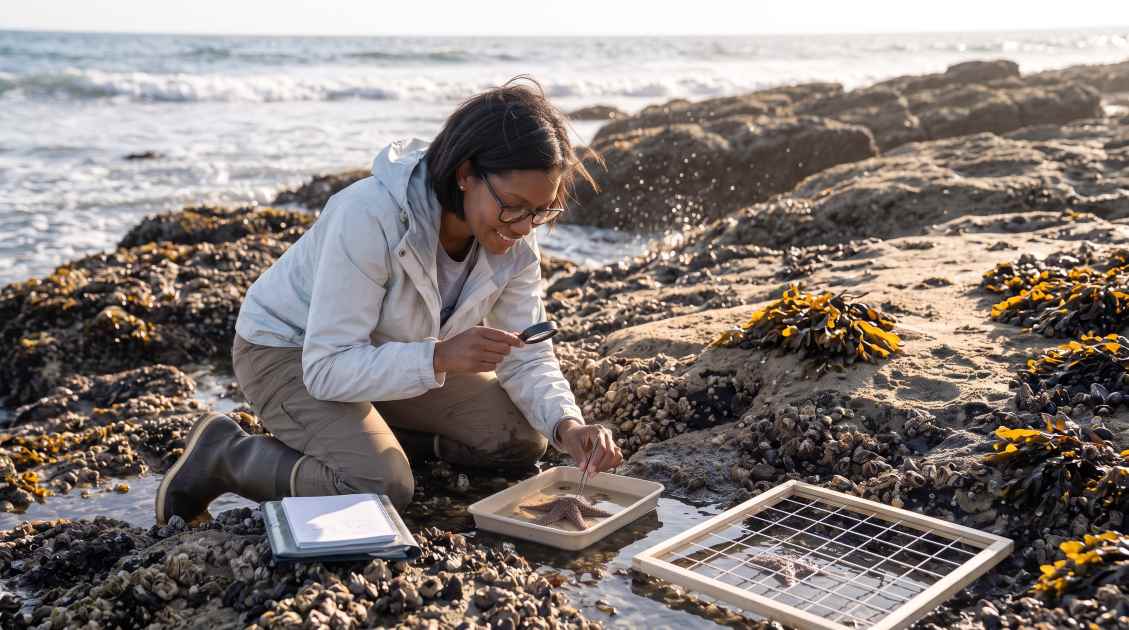
Search for the best colleges with marine biology and you’ll find the same 15 to 20 schools ranked by prestige. Most lists don’t explain what makes one program genuinely stronger than another for this major. That’s a real gap, because marine biology isn’t biology with better scenery. It’s a field-dependent science. A school’s actual research infrastructure shapes a student’s four years far more than its overall ranking does. This guide covers what separates a strong program. It profiles the schools worth a closer look. It also breaks down how a marine biology career path diverges from a general biology one. Finally, it gives Florida and California, the two states with the deepest program clusters, their own look.
Key Takeaways
- The best colleges with marine biology programs will have things like field stations, named research vessels and partner labs.
- UC Santa Barbara, Boston University and UC San Diego lead Waystone’s own scored ranking of marine biology programs nationally.
- Marine biology and general biology diverge most in career outcomes: fisheries, marine policy and aquaculture versus medicine and biotech.
- University of Miami tops Florida’s list and UC Santa Barbara tops California’s, each scored separately from the national ranking.
- A niche, research-heavy major changes what matters in an application. Quantitative coursework and real field or research exposure carry more weight than an applicant’s distance from the coast.
What actually separates a strong marine biology program
Marine biology is a field science first. A lecture can cover the biochemistry of a coral reef. It can’t replicate collecting a plankton tow at sunrise, or running water-quality tests on a real estuary. That’s why the strongest colleges with marine biology majors share four structural features a course catalog alone won’t show you.
A dedicated field station gives students year-round or semester-long access to a real coastal ecosystem, not a single field-trip day. Duke’s Marine Laboratory in Beaufort, North Carolina, and UC Santa Cruz’s Long Marine Laboratory are both built this way. Undergraduates take courses on-site, not just visit once. Duke is going further starting in fall 2027. A new program called Duke Embark lets incoming first-years spend their entire opening semester at the Marine Lab. They move to the main Durham campus for spring, according to Duke’s own announcement. Note: Duke did not make our best list because there was no outcome data available.
Named research vessels are worth checking for, not just a school’s claim to have “access to the ocean.” Scripps Institution of Oceanography operates a full fleet: the R/V Sally Ride, R/V Roger Revelle and R/V Robert Gordon Sproul. Oregon State’s marine biology option includes a term at the Hatfield Marine Science Center. There, students trawl for fish aboard the R/V Elakha as part of an intensive field course. Miami’s Rosenstiel School runs its own research catamaran, the F.G. Walton Smith, for tropical-ocean fieldwork. A program with a named vessel and a real seat-time policy for undergraduates is making a different commitment. A vague claim to “boat access” doesn’t say who actually gets on board.
The strongest programs also connect students to outside research. That might be a NOAA fisheries lab, an aquarium’s conservation program, or a state wildlife agency. Nova Southeastern’s Guy Harvey Oceanographic Center and Miami’s proximity to federal ocean-research facilities both work this way.
Quantitative skills matter more than most applicants expect. Statistics, GIS, coding and chemistry increasingly separate strong candidates in ecology, fisheries and conservation research, not just biology coursework alone. A program that folds these into its marine biology core, not just electives, is training researchers, not just students.
None of these four features show up on a typical ranking chart. But they’re the difference between a lecture-based marine biology degree and one where a sophomore has logged real field hours.
Which type of marine biology program actually fits you
Once a program clears that bar, the real question is which kind actually matches what you want to do. Five lenses cover most of what students are actually choosing between.
Best for oceanographic research
Oceanography-centered programs study marine life inside the whole ocean system, not just individual species or a single coastline. Expect coursework in ocean physics, chemistry, geology and climate alongside biology, plus a university-affiliated oceanographic institution behind the major. This path fits students eyeing graduate school, federal science agencies, marine policy or climate research. UC San Diego runs its marine biology major through Scripps Institution of Oceanography. Biology, chemistry and physical oceanography are built into the degree from year one, not added on as electives.
Best for broad aquatic biology
Some students care about water, not just the ocean specifically: estuaries, wetlands, rivers, lakes and the watersheds connecting them all. A broad aquatic biology major covers freshwater and marine ecology together, useful preparation for conservation, water-quality and habitat-restoration work. It also keeps career paths wider than a marine-only degree. Watershed science, wildlife management and environmental consulting all draw on the same coursework. UC Santa Barbara’s Aquatic Biology B.S. is one of the few undergraduate majors in the country built this way. It pairs Pacific coursework with a protected salt marsh and a Sierra Nevada station for the freshwater side.
Best for required field immersion
Some programs treat fieldwork as optional, an internship a motivated student can chase down. Others make it a graduation requirement. Every major leaves with real field hours, not just the students who sought it out. That distinction matters if you want to test whether field science is the right fit before you graduate. UCLA’s Marine Biology major requires the Marine Biology Quarter of every student. It’s a self-designed research project at a field station, with real data collection and a final presentation.
Best for frequent, local fieldwork
A single expensive trip senior year builds a different skill set than fieldwork spread across four years. Frequent, low-barrier access to real habitats, close enough for a regular class trip, lets students build field skills gradually. That beats cramming them into one intensive term. It also produces a stronger research portfolio by graduation, since repetition is what builds real competence with field methods. CSU Long Beach’s marine biology students work nearby bays, estuaries and rocky habitats throughout the degree, not just senior year.
Best for coastal research infrastructure
Proximity to water isn’t the same as research infrastructure. The stronger signal is a campus plugged into a working research ecosystem: seawater labs, specialized collections and research vessels. Federal or state science agencies should operate on-site, not just nearby. That combination lets undergraduates do real research early and build the kind of faculty relationships that lead to graduate-school recommendations. UC Santa Cruz’s marine biology program sits at the Coastal Science Campus on the edge of Monterey Bay. It shares the site with NOAA’s Southwest Fisheries Science Center and a state Fish and Wildlife lab.
Keep these five lenses in mind as you read the rankings below. The same school can be a top pick under one lens and a mismatch under another.
The best colleges with marine biology
Once you know what to look for, actual data narrows the field fast. The rankings below come from Waystone’s own scoring based on real outcomes. It blends financial payoff, 10-year ROI, institutional strength (retention, faculty access, socioeconomic access and library resources), and major concentration. See Waystone’s methodology for how each percentile gets calculated. These are the top 20 of a larger eligible pool, not the entire list of schools that offer the major.
This is a different lens than the field-station and vessel criteria above.
| Rank | School & program | What makes it distinctive | Score |
|---|---|---|---|
| 1 | UC Santa Barbara B.S. Aquatic Biology | Broad aquatic-systems program spanning marine and freshwater biology, including ocean, estuarine, lake and stream ecology | 65.7 ⓘ UC Santa Barbara: score breakdown
|
| 2 | Boston University B.A. Marine Science | Marine Semester combines research-based courses, fieldwork and lab learning in New England and Belize | 64.9 ⓘ Boston University: score breakdown
|
| 3 | UC San Diego B.S. Marine Biology | Offered through Scripps Institution of Oceanography, with a major research-vessel fleet | 60.2 ⓘ UC San Diego: score breakdown
|
| 4 | University of Georgia Biology B.S. + Marine Biology Area of Emphasis | A broad biology degree with a marine emphasis, not a standalone marine biology major | 60.1 ⓘ University of Georgia: score breakdown
|
| 5 | UCLA B.S. Marine Biology | Every major completes Marine Biology Quarter, a required immersive field-based component | 59.1 ⓘ UCLA: score breakdown
|
| 6 | University of Miami B.S. Marine Biology and Ecology | Rosenstiel School program emphasizing quantitative skills and tropical marine research | 59.1 ⓘ University of Miami: score breakdown
|
| 7 | CSU Long Beach B.S. Marine Biology | Frequent local fieldwork in Southern California bays, estuaries and rocky intertidal zones | 58.0 ⓘ CSU Long Beach: score breakdown
|
| 8 | Stony Brook University B.S. Marine Sciences | Interdisciplinary marine-science degree; a dedicated Marine Vertebrate Biology track is also available | 57.9 ⓘ Stony Brook University: score breakdown
|
| 9 | University of South Carolina B.S. Marine Science | Requires a field and lab research experience at the Baruch Marine Field Laboratory | 53.2 ⓘ University of South Carolina: score breakdown
|
| 10 | UC Santa Cruz B.S. Marine Biology | Based at the Coastal Science Campus near Monterey Bay, alongside Long Marine Laboratory | 52.9 ⓘ UC Santa Cruz: score breakdown
|
| 11 | University of Delaware B.S. Marine Science, Marine Biology concentration | Combines marine biology with oceanography and policy, anchored by the Lewes research community | 51.2 ⓘ University of Delaware: score breakdown
|
| 12 | Roger Williams University B.A. or B.S. Marine Biology | Rhode Island coastal setting with wet-lab learning and research-vessel experience | 47.3 ⓘ Roger Williams University: score breakdown
|
| 13 | University of Connecticut B.A. or B.S. Marine Sciences | Centered on the Avery Point coastal campus, spanning biology, chemistry, geology and physics | 44.4 ⓘ University of Connecticut: score breakdown
|
| 14 | Nova Southeastern University B.S. Marine Biology | Research at the oceanfront NSU Oceanographic Campus, with a bachelor’s-to-master’s option | 43.5 ⓘ Nova Southeastern University: score breakdown
|
| 15 | University of Rhode Island B.S. Marine Biology | Biology-based major backed by URI’s Graduate School of Oceanography | 42.7 ⓘ University of Rhode Island: score breakdown
|
| 16 | Eckerd College B.S. Marine Science, Marine Biology specialization | Four formal specializations: marine biology, chemistry, geology and geophysics | 41.7 ⓘ Eckerd College: score breakdown
|
| 17 | University of New England B.S. Marine Science, Marine Biology concentration | Pairs with related programs in aquaculture, aquarium sciences and marine affairs | 41.2 ⓘ University of New England: score breakdown
|
| 18 | University of Hawaiʻi at Mānoa B.A. or B.S. Marine Biology | Tropical Pacific setting, with summer research based at Moku o Loʻe (Coconut Island) | 39.9 ⓘ University of Hawaiʻi at Mānoa: score breakdown
|
| 19 | Rutgers University-New Brunswick B.S. Marine Sciences, Marine Biology/Biological Oceanography option | Research-focused path from molecular biology through ecosystem science | 36.4 ⓘ Rutgers University-New Brunswick: score breakdown
|
| 20 | Florida Southern College B.S. Marine Biology | Field experience paired with study of marine ecology, climate change and resource use | 35.7 ⓘ Florida Southern College: score breakdown
|
Payoff and ROI are percentile ranks against every eligible marine biology program nationally, not raw dollar figures. Institutional Strength blends retention, student-faculty ratio, Pell equity and library investment into one percentile. Major Fit measures how concentrated each school’s graduating class is in marine biology, not just whether it’s offered.
Your personal best fit also depends on your specific interest inside marine biology. Fisheries, coral reef ecology, marine mammal research and ocean policy each point toward a different subset of these schools. That’s exactly the kind of side-by-side comparison Waystone’s College Finder is built to run. Search marine biology and sort every school that offers it by completion rate, median earnings and selectivity.
Marine biology vs. general biology: how the career paths actually diverge
Marine biology and general biology share a first year or two of coursework at most schools: chemistry, genetics, statistics, however, the career paths built on that foundation diverge fast.
| Marine biology | General biology | |
|---|---|---|
| Core focus | Marine organisms, ecosystems, ocean processes and field methods | Broad life sciences: cells, genetics, evolution, physiology |
| Common experiences | Coastal fieldwork, wet labs, boats, marine station stays | Campus-based labs, with marine electives if you seek them out |
| Career directions | Fisheries science, conservation, aquariums, coastal management | Medicine, biotech, lab science, education, research |
| Flexibility | More specialized from the start | Broader, with room to add marine coursework later |
A general biology degree keeps doors open toward medicine, biotechnology, pharmaceutical research and lab-based graduate programs. A marine biology degree narrows that field on purpose, trading flexibility for depth in a specific direction. That direction could be fisheries and wildlife biology, marine policy and conservation, aquaculture, or aquarium and zoo science, or it could also be a path toward a master’s or Ph.D. in oceanography.
Real marine biology career titles back this up. The University of Washington’s own careers page lists fish biologist, research technician, lab coordinator and field scientist as common outcomes. According to the Bureau of Labor Statistics, zoologists and wildlife biologists are the closest tracked category to marine biology. 2024 data indicated that they earned a median annual wage of $72,860, and demand is strongest in state and federal conservation agencies and research institutions, not private industry. That’s a different employment picture than general biology’s broader spread across healthcare, pharma and biotech. Those industries often pay more at the entry level, but they have nothing to do with fieldwork.
The practical upshot: maximum flexibility after graduation may mean a general biology major with a marine biology concentration. The same goes if you’re still weighing medicine, research and other paths. That keeps options open while still building real field experience. A student set on fisheries work, marine policy or aquarium science is better served by a dedicated marine biology major. The degree itself signals that specialization directly to employers and graduate programs. Independent research roles, and most academic positions, typically require graduate training beyond the bachelor’s degree.
That’s the same career-backward logic behind Waystone’s guide to whether major matters more than school. The answer changes based on how locked-in the career target actually is. Marine biology is a clean example of a major where that answer swings hard in one direction or the other.
Admissions considerations for a niche, research-heavy major
Applying to a research-heavy, lower-enrollment major like marine biology raises considerations a general biology application doesn’t.
What actually differs about the application
Program size cuts both ways. Many of the strongest marine biology programs admit small cohorts by design. Field courses and vessel time only scale to so many students at once, so a school with a moderately selective overall acceptance rate can have a far more selective marine biology cohort. The reverse happens too. A safety school on paper can become a reach once you check its marine biology enrollment specifically.
Before you add a program to your list, ask its department a few direct questions. Can first-year and second-year students actually join a lab? How many undergraduates complete fieldwork each year? Are the vessels and field stations used in required courses, or only in electives? What internships have recent graduates actually landed? Those answers tell you more than a glossy claim to “have a marine lab.”
Course rigor in science and math matters more here than it does for some majors. Admissions readers look for real signal in an applicant’s chemistry, biology and statistics coursework, AP or dual-enrollment where available. Precalculus, calculus and statistics in high school build the quantitative base marine science programs expect on day one. That coursework predicts readiness for the major’s early requirements, not just genuine interest in the subject.
Geography and essay strategy
You do not need to live near the coast to build a strong marine biology application. Field experience matters more than geography. A citizen-science project through a local nature center can carry real weight. So can a research assistantship with any biology lab, or a solid independent project using public ocean data. Several of the programs above, including Duke, Oregon State and the University of Washington, actively recruit students from landlocked states. Their curricula are built to get any student into the field fast, regardless of where they grew up.
Your essay angle matters too. Admissions readers see the same “I’ve always loved the ocean” opening constantly. The marine-biology version of that trap is an essay built entirely around wanting to work with dolphins. A stronger angle ties one real question, like coral bleaching, to what you actually want to study. That’s the same specificity behind Waystone’s essay blueprint approach: a real anchor, not a general love of the subject.
None of this predicts admissions odds. A student’s actual chances at a specific marine biology program depend on that program’s factors. Think GPA range, test-optional policy, and how it weighs activities. Those get cross-referenced against the student’s real profile, not a general rule that applies to every applicant. That’s the same school-specific matching behind Waystone’s methodology for sorting a college list into reach, good fit and safety.
Where marine biology programs cluster, and why Florida and California deserve their own look
The best colleges with marine biology programs aren’t spread evenly across the country, they cluster along coastlines with the research infrastructure to support them. Two states in particular, Florida and California, host a lot of the top programs. Both get their own breakdown below, ranked the same way as the national list. That pattern holds outside these two states too. The University of Hawaiʻi at Mānoa and the University of New Hampshire both build marine biology around their own coastlines. The same logic applies anywhere with real ocean access.
Best colleges for marine biology in Florida
Florida’s coastline, coral reefs and year-round research season make it the most concentrated marine biology cluster in the country.
| Rank | School & program | City | What makes it distinctive | Score |
|---|---|---|---|---|
| 1 | University of Miami B.S. Marine Biology and Ecology | Coral Gables | Its own research catamaran, the F.G. Walton Smith, near the Florida Keys | 54.7 ⓘ University of Miami: score breakdown
|
| 2 | Eckerd College B.S. Marine Science, Marine Biology specialization | St. Petersburg | Real marine research starting freshman year; the state’s highest major concentration | 41.6 ⓘ Eckerd College: score breakdown
|
| 3 | Florida Southern College B.S. Marine Biology | Lakeland | The state’s only inland program, offset by travel fieldwork in Costa Rica, Jamaica and the Bahamas | 35.6 ⓘ Florida Southern College: score breakdown
|
| 4 | Nova Southeastern University B.S. Marine Biology | Fort Lauderdale | Its own Guy Harvey Oceanographic Center | 34.7 ⓘ Nova Southeastern University: score breakdown
|
| 5 | University of Tampa B.S. Marine Science-Biology | Tampa | Marine Science Field Station on Tampa Bay, with four research vessels including the 46-foot BIOS II | 23.6 ⓘ University of Tampa: score breakdown
|
This top five doesn’t cover every strong option in the state. USF St. Petersburg, Florida Tech and the University of Florida all run programs outside this top five. They’re still worth a look if your interests or budget point that direction.
Best colleges for marine biology in California
California’s marine biology cluster runs the length of the coast. Cal Poly San Luis Obispo, CSU Monterey Bay and Moss Landing round out the state’s options outside this top five. Each is worth investigating on its own merits.
| Rank | School & program | City | What makes it distinctive | Score |
|---|---|---|---|---|
| 1 | UC Santa Barbara B.S. Aquatic Biology | Santa Barbara | Marine Science Institute reef and kelp-forest access, plus a separate Creative Studies marine science major | 67.4 ⓘ UC Santa Barbara: score breakdown
|
| 2 | UC San Diego B.S. Marine Biology | La Jolla | Scripps’ named fleet (R/V Sally Ride, Roger Revelle, Robert Gordon Sproul) and the Birch Aquarium | 63.1 ⓘ UC San Diego: score breakdown
|
| 3 | UCLA B.S. Marine Biology | Los Angeles | Required Marine Biology Quarter: a self-designed research residency at a field station | 61.1 ⓘ UCLA: score breakdown
|
| 4 | CSU Long Beach B.S. Marine Biology | Long Beach | Catalina Semester, a full term at USC’s Wrigley Marine Science Center | 56.9 ⓘ CSU Long Beach: score breakdown
|
| 5 | UC Santa Cruz B.S. Marine Biology | Santa Cruz | Long Marine Lab plus Año Nuevo Island Reserve fieldwork access | 50.4 ⓘ UC Santa Cruz: score breakdown
|
These percentiles work the same way as the national table. Payoff and ROI measure financial outcomes. Institutional Strength blends retention, faculty access, socioeconomic access and library resources. % of Grads shows major concentration.
Frequently asked questions about best colleges with marine biology
What is the best college for marine biology in the US?
“Best” can mean different things depending on your goals. But Waystone’s own ranking has a clear #1: UC Santa Barbara, at 65.7 out of 100. The score weighs four inputs: financial payoff (30%), 10-year ROI (30%), institutional strength (30%) and major concentration (10%). UCSB’s payoff percentile is a perfect 100, the strongest debt-to-earnings picture on the list. Its ROI percentile is a more modest 43. Its institutional strength scores 63.4, solid but not exceptional. What actually separates UCSB from Boston University, which finishes a close second at 64.9, is that near-perfect payoff score. UCSB’s Aquatic Biology major spans marine and freshwater biology: ocean, estuarine, lake and stream ecology, not just the ocean. Boston University and UC San Diego rank second and third. The right program for you still depends on your specific interest inside marine biology.
Do you need to live near the ocean to study marine biology?
No. Several strong programs, including Duke, Oregon State and the University of Washington, actively recruit students from inland states. They build early coursework to bring every student up to speed on field skills, regardless of where they grew up.
What’s the difference between a marine biology degree and a marine science degree?
Marine biology focuses specifically on marine organisms and ecosystems. Marine science is a broader umbrella that can include oceanography, marine chemistry and marine geology alongside biology. Some schools use the terms almost interchangeably, so check a program’s actual course requirements instead of assuming from its name.
Is marine biology a good major if I’m not sure about a research career?
Yes, with a caveat. A marine biology degree opens paths beyond lab research: marine policy, aquarium and zoo science, environmental education, conservation nonprofit work. But it’s still more specialized than general biology. If you’re unsure, a biology major with a marine biology concentration keeps more options open while building real field experience.
Are marine biology programs hard to get into?
It depends on the specific program, not just the school’s overall acceptance rate. Marine biology cohorts are often smaller than a school’s biology program overall, since field courses and vessel space are limited. That means a program can be more selective than the university’s published acceptance rate suggests.
What should I ask a marine biology program before I apply?
Ask whether first-year and second-year students can join a lab, and how many complete fieldwork each year. Also ask whether research vessels appear in required courses or only in electives. Recent graduates’ actual internship placements matter more than a general claim to “have a marine lab.”
Where to go from here
The best colleges with marine biology programs aren’t the schools with the flashiest brand name attached to marine biology. They’re the ones that get undergraduates into a field station, onto a research vessel or into a partner lab early. They also keep that access going for all four years. That distinction matters more here than in most majors, since marine biology is learned partly outside a classroom.
Start by matching that framework, not a ranking, to your own interest inside the field. Fisheries and wildlife work, coral reef research, marine policy and aquaculture all point toward a different subset of programs. That’s true even among schools that all technically offer marine biology.
Search marine biology on Waystone’s College Finder. See completion rates, median earnings, ROI, debt payoff score and selectivity for every school that offers it. That’s real outcomes data, not a single ranked list. Then create a profile to build a plan around your actual GPA, state and target within marine biology.